What Goes Into a New Roof Price
A new roof price is driven by four things and everything else is detail: the roof area and pitch, the covering material, scaffold access, and whether the timbers underneath are sound. Two identical-looking semis on the same Northampton street can produce quotes thousands of pounds apart if one has rotten battens and the other does not.
A proper re-roof is not just new tiles. It means a full strip of the existing covering, disposal of the waste, new breathable membrane replacing the old bitumen felt, new treated battens, re-laying or replacing tiles, fresh ridge and hip bedding, new lead flashings at every junction, and scaffold throughout. A quote that leaves any of these out is not comparing like with like.
Material Choice Sets the Price
Concrete interlocking tile is the most economical mainstream covering and the correct like-for-like replacement on Northampton's post-war estates. Clay plain tile is dearer but the right material for Victorian and 1930s properties where it was originally used. Natural slate is the premium option, appropriate for period terraces and the highest long-term value where the structure allows it.
Scaffold and VAT
Scaffold is a legal requirement for working at height and appears as a line on every genuine quote, typically £800–£1,500 for a two-storey Northampton semi. If a quote has no scaffold line, ask why. Re-roofing an existing home usually qualifies for the reduced 5% VAT rate rather than 20% - always confirm this in writing before work starts.
When Replacement Beats Repair
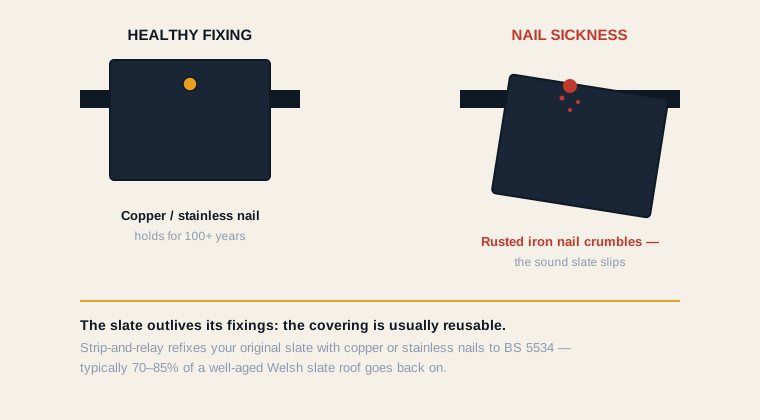
Isolated slipped tiles are a repair. Replacement becomes the more cost-effective choice when the felt underlay has failed across the whole roof, battens are rotten, nail sickness affects both slopes, or you are paying for the same repair every winter. A free survey assessing felt, battens and fixings gives you a clear answer.